
2026 Harley-Davidson® Low Rider® ST near Evans, GA
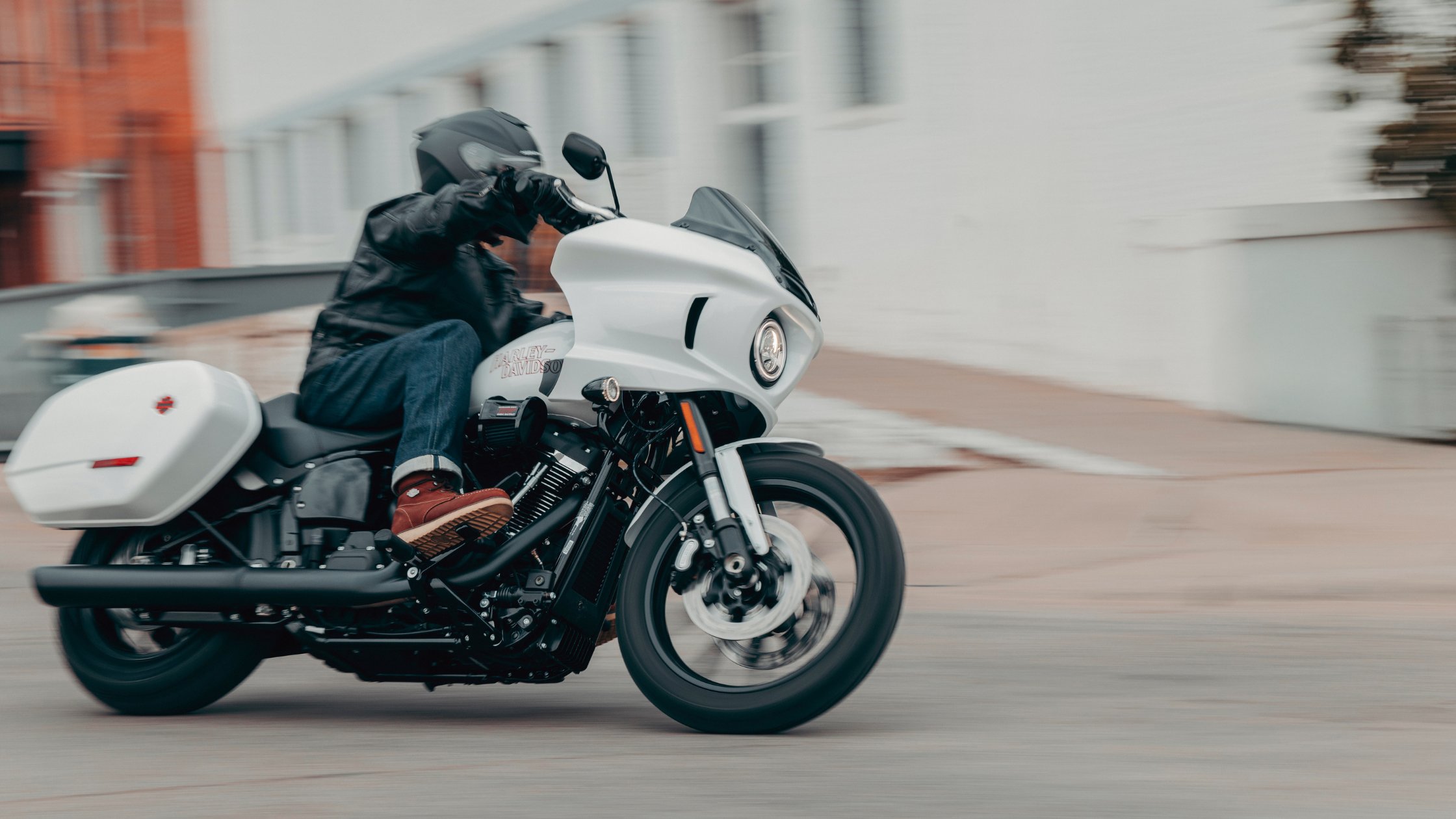
The 2026 Harley-Davidson® Low Rider® ST is engineered with a focus on measurable performance, structural rigidity, and rider control. This model integrates a Milwaukee-Eight® 117 High Output engine with a precisely tuned chassis and a comprehensive set of rider-assist systems. Its configuration supports consistent output, predictable handling, and efficient operation across varying riding conditions.
High-Output Engine Configuration and Mechanical Design
The 2026 Harley-Davidson® Low Rider® ST is powered by a Milwaukee-Eight® 117 High Output engine with a displacement of 117 cubic inches, equivalent to 1,923 cubic centimeters. The engine operates with a compression ratio of 10.3 to 1, which supports efficient combustion and consistent power delivery. It produces 114 horsepower at 5,000 revolutions per minute and 128 foot-pounds of torque at 4,000 revolutions per minute. This output profile supports steady acceleration and sustained performance across a wide operating range.
The engine uses a pushrod-operated overhead valve system with hydraulic self-adjusting lifters. Each cylinder contains four valves, which improves airflow and contributes to combustion efficiency. The bore measures 4.075 inches, and the stroke is 4.5 inches, forming a long-stroke configuration that supports torque production at lower engine speeds.
Fuel delivery is managed by an Electronic Sequential Port Fuel Injection system. This system ensures accurate fuel metering under different load conditions. Air intake is handled through a Heavy Breather intake assembly with a washable synthetic media filter. The exposed filter design allows consistent airflow while maintaining filtration efficiency.
The exhaust system follows a two-into-one configuration with a catalyst integrated into the header. This layout supports exhaust flow efficiency while maintaining emissions compliance. Lubrication is managed through a pressurized dry-sump system with an oil cooler, which stabilizes engine temperature during extended operation.
Transmission System and Drivetrain Ratios
The drivetrain is configured to transfer engine output efficiently to the rear wheel while maintaining durability and smooth engagement. The primary drive uses a chain with a 34 to 46 ratio. The final drive uses a belt system with a 32 to 66 ratio, which reduces maintenance requirements and contributes to quieter operation.
A 6-speed Cruise Drive® transmission is standard. The transmission provides a wide range of gear ratios to support both low-speed maneuvering and highway cruising. First gear has an overall ratio of 9.311, while sixth gear is set at 2.79. Intermediate gear ratios are spaced to maintain consistent acceleration and minimize abrupt changes in engine speed.
The clutch system is a mechanical, 10-plate wet clutch with assist and conventional operation. This configuration reduces lever effort while maintaining consistent engagement. The clutch design supports repeated use under varying load conditions without significant performance degradation.
Chassis Structure and Suspension Configuration
The frame is constructed from mild steel using a tubular design with a rectangular-section backbone. The structure incorporates stamped, cast, and forged junctions, which are joined using MIG welding. Aluminum forged fender supports are integrated into the frame design to reduce weight while maintaining structural strength.
The swingarm is also constructed from mild steel and features tubular sections with a stamped cross-member. Forged axle junctions enhance durability, and the assembly is designed to accommodate a removable belt spacer.
Front suspension is handled by a 43-millimeter inverted fork with a single cartridge system. Aluminum fork triple clamps provide rigidity and reduce flex under load. The suspension uses a single-rate spring to maintain predictable response characteristics. Front suspension travel measures 5 inches.
The rear suspension uses a hidden coil-over monoshock with a free piston design. The shock provides a stroke of 56 millimeters and includes hydraulic preload adjustment. Rear suspension travel is measured at 4.4 inches. This configuration supports load adaptability while maintaining consistent ride height and damping performance.
Dimensional Specifications and Rider Geometry
The 2026 Harley-Davidson® Low Rider® ST has an overall length of 92.9 inches, with an overall width of 35 inches and an overall height of 50.8 inches. The wheelbase measures 63.6 inches, which contributes to stability during straight-line travel. The steering geometry includes a rake angle of 28 degrees and a trail measurement of 5.7 inches, which supports predictable steering response.
Seat height is 27 inches in the laden condition and 28.1 inches when unladen. Ground clearance is measured at 5.7 inches. These dimensions support a low center of gravity, which contributes to balanced handling and improved control at lower speeds.
The motorcycle uses Michelin® Scorcher 31 tires for both front and rear applications. The front tire specification is 110 over 90B19, while the rear tire is 180 over 70B16. This combination supports traction and stability across different road surfaces.
Brake System and Controlled Deceleration
The braking system is designed to provide consistent stopping performance with controlled modulation. The front braking system uses dual rotors with a diameter of 11.8 inches. These rotors are paired with 4-piston fixed calipers, which deliver uniform pressure distribution during braking.
The rear brake uses a single rotor with a diameter of 11.5 inches and a thickness of 0.23 inches. A 2-piston floating caliper is used to maintain effective contact with the rotor surface. Both front and rear rotors are designed with a split 7-spoke floating configuration.
An Anti-lock Braking System is included as standard equipment. This system prevents wheel lock during braking and maintains directional stability. The braking configuration supports controlled deceleration across different riding conditions.
Integrated Rider Safety and Stability Systems
The 2026 Harley-Davidson® Low Rider® ST includes multiple electronic systems designed to support traction and stability. The Traction Control System monitors wheel speed and adjusts power delivery to maintain grip. The Drag-Torque Slip Control System reduces rear wheel slip during downshifting by managing engine braking.
The Tire Pressure Monitoring System provides continuous feedback on tire pressure levels, allowing adjustments as needed to maintain optimal performance. These systems operate in coordination to support consistent handling.
Cornering enhancements are also included. Cornering Anti-lock Braking System adjusts braking force based on lean angle. The Cornering Traction Control System modifies power delivery during cornering to maintain stability. Cornering Drag-Torque Slip Control System supports smoother deceleration when the motorcycle is leaned over. These systems contribute to controlled operation during directional changes.
Electrical System and Functional Components
The electrical system uses a sealed, maintenance-free absorbed glass mat battery rated at 12 volts and 17.5 amp-hours, with a cold cranking capacity of 310 CCAs. Charging is managed through a three-phase, 48-amp system that provides consistent electrical output at varying engine speeds.
The starting system uses a 1.6 kilowatt electric starter with solenoid shift engagement. This system ensures reliable ignition under different conditions.
Lighting is fully LED-based. The headlamp includes a low beam, a high beam, and a signature position lamp. The tail and stop lamps use LED technology, and both front and rear turn signals are LED bullet-style units. This configuration improves visibility while maintaining energy efficiency.
A USB-C power outlet provides 5 volts at 2.4 amps, allowing for device charging during operation.
Instrumentation and Rider Information Display
The instrument cluster includes a 4-inch analog speedometer combined with a digital display. The display provides multiple data points, including gear position, odometer readings, fuel level, and range estimation. Additional information includes ride modes, traction control status, ABS indicators, and tire pressure data.
The system also displays cruise control status, a clock, trip information, and a tachometer reading. This integrated display allows the rider to monitor key operational metrics without distraction.
Fuel Capacity and Efficiency Metrics
The motorcycle is equipped with a fuel tank that holds 5 gallons. A reserve capacity of 1 gallon is indicated by a warning light system. This configuration supports extended riding distances with fewer refueling intervals.
Fuel economy is estimated at 47 miles per gallon under combined city and highway conditions. This efficiency level supports consistent operation over longer distances while maintaining performance output.
Oil capacity with filter is 5 quarts, and the transmission holds 1 quart of fluid. The primary chain case requires 1.25 quarts. These capacities support proper lubrication across all mechanical systems.
Weight Distribution and Load Parameters
The 2026 Harley-Davidson® Low Rider® ST has a weight of 686 pounds as shipped and 712 pounds in running order. The gross vehicle weight rating is 1,160 pounds, which defines the maximum combined weight of the motorcycle, rider, passenger, and cargo.
The front axle weight rating is 450 pounds, while the rear axle rating is 730 pounds. These specifications ensure balanced load distribution across the chassis.
Luggage capacity is measured at 2 cubic feet, providing storage space for essential items without affecting handling characteristics.