
2026 Harley-Davidson® CVO™ Road Glide® ST near Evans, GA
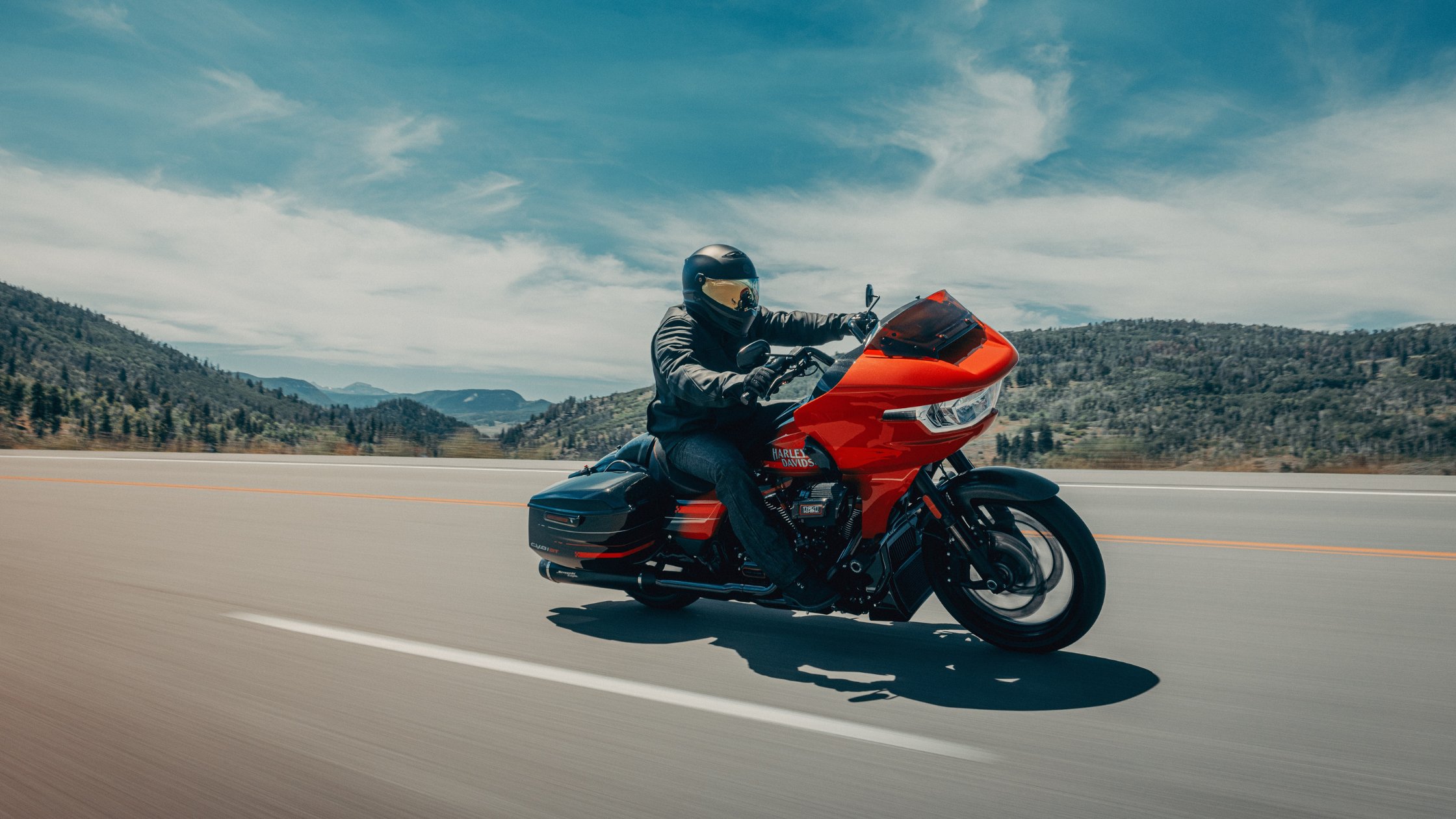
The 2026 Harley-Davidson® CVO™ Road Glide® ST is designed as a performance-oriented touring motorcycle that combines high-output mechanical performance with advanced rider technologies and touring-focused chassis engineering. This model emphasizes measurable specifications and functional design elements rather than cosmetic additions. Every component, from the powertrain to the electronic systems, serves a defined operational purpose aimed at enhancing stability, performance consistency, and rider control during long-distance riding.
The motorcycle uses a Milwaukee-Eight® 121 High Output engine paired with a six-speed transmission, adjustable suspension systems, integrated electronic safety features, and a large digital infotainment display. Its dimensions, weight distribution, and geometry prioritize stability at sustained speeds while maintaining maneuverability. The overall configuration positions the 2026 Harley-Davidson® CVO™ Road Glide® ST as a technically advanced platform built for riders who value mechanical precision, engineered performance, and integrated technology solutions.
Engine Performance and Power Characteristics
The engine installed in the 2026 Harley-Davidson® CVO™ Road Glide® ST is the Milwaukee-Eight® 121 High Output V-twin. It features a displacement of 121 cubic inches or 1,977 cc, with bore and stroke measurements of 4.075 inches and 4.6 inches respectively. The engine uses pushrod-operated overhead valves and hydraulic self-adjusting lifters, with four valves per cylinder. This configuration supports efficient airflow and consistent valve operation, reducing maintenance requirements while maintaining stable performance.
The compression ratio is rated at 11.4:1, supporting strong combustion efficiency and high-output performance. Fuel delivery is managed through Electronic Sequential Port Fuel Injection, which provides consistent metering and throttle response across different operating conditions. The lubrication system is pressurized and dry-sump, assisting with temperature management and reliable oil circulation under load.
Performance output is measured at 145 ft-lb of torque at 4,000 rpm and 127 horsepower at 4,900 rpm. These figures indicate strong mid-range power delivery combined with sustained acceleration capability. The engine is paired with a fiberglass washable air cleaner designed for consistent airflow efficiency and long-term serviceability. Exhaust flow is handled through a 2-1-2 dual exhaust system with tapered mufflers, engineered for balanced performance and acoustic control.
Drivetrain Configuration and Gear Management
Power transfer from the engine occurs through a chain-driven primary system with a 34/46 ratio, followed by a belt-driven final drive with a 30/68 ratio. This combination supports durability while reducing maintenance compared to fully chain-driven touring setups. The clutch system uses a mechanically actuated 10-plate wet assist-and-slip design. Assist functionality reduces lever effort, while slip management helps maintain rear-wheel stability during aggressive downshifts.
The transmission is a six-speed Cruise Drive® unit designed for broad usability across low-speed maneuvering and high-speed touring. Gear ratios progress from a low first gear ratio of 10.233 for strong initial acceleration to a sixth gear ratio of 3.067 for reduced engine speed during highway cruising. The spacing between gears allows smooth progression through the powerband, maintaining stability and minimizing abrupt transitions.
This drivetrain design supports predictable performance, allowing riders to manage power delivery efficiently across varied riding environments. The combination of torque-rich output and consistent gear spacing contributes to steady acceleration and reduced drivetrain stress during extended operation.
Chassis Architecture and Structural Engineering
The frame structure uses mild steel construction with a tubular design, incorporating a two-piece stamped and welded backbone. Cast and forged junctions strengthen high-load areas while maintaining controlled flexibility. Twin down-tubes and a bolt-on rear frame with forged fender supports contribute to structural rigidity and service accessibility. MIG welding processes are used throughout the frame and swingarm to ensure consistent strength and alignment.
The swingarm also uses mild steel in a two-piece drawn and welded configuration with forged junctions. This construction method enhances stability during acceleration and cornering while managing load transfer from the rear suspension. The chassis geometry includes a steering head rake of 26 degrees, a fork angle of 29.25 degrees, and a trail measurement of 6.7 inches. Combined with a 64-inch wheelbase, these values create a stable platform suitable for sustained speed while maintaining directional precision.
The motorcycle measures 94.9 inches in length, 36.4 inches in width, and 50.4 inches in overall height. Laden seat height is listed at 27.5 inches, supporting accessibility for a wide range of riders. Static ground clearance measures 5.1 inches, balancing cornering capability with touring practicality.
Suspension Systems and Ride Dynamics
Front suspension uses 47 mm inverted forks featuring adjustable preload, compression damping, and rebound damping. This level of adjustability allows riders to fine-tune handling characteristics based on rider weight, luggage load, and preferred riding style. The inverted design increases rigidity and front-end precision during braking and corner entry.
Rear suspension uses an emulsion shock system that also includes adjustable preload, compression damping, and rebound damping. This arrangement supports balanced chassis behavior under acceleration and cornering forces. Suspension travel measures 4.6 inches at the front and 3 inches at the rear, providing sufficient compliance for surface irregularities while maintaining controlled body motion.
The combination of adjustable components allows tuning flexibility that supports both performance-focused riding and long-distance touring comfort. These systems work together to maintain tire contact and stability under varying conditions, improving handling predictability.
Wheel, Tire, and Braking Engineering
The 2026 Harley-Davidson® CVO™ Road Glide® ST rides on black seven-spoke cast aluminum wheels. The front wheel measures 19 inches in diameter and 3.5 inches in width, while the rear measures 18 inches in diameter and 5 inches in width. Tires are Dunlop® Harley-Davidson® Series bias blackwall units, specified as 130/60B19 for the front and 180/55B18 for the rear. This configuration balances steering response with rear traction for performance touring use.
Braking performance is supported by dual front fixed four-piston radial-mounted calipers and a single rear axial-mounted caliper. Front braking uses dual floating wave-style rotors measuring 12.6 inches in diameter, while the rear rotor measures 11.8 inches. Rotor thickness specifications contribute to heat management during repeated braking cycles. The system includes standard Anti-lock Braking System functionality, assisting with wheel control under heavy braking inputs.
Lean angle capability is rated at 31 degrees on both sides, indicating strong cornering clearance for a motorcycle in the touring category. Combined with chassis geometry and braking hardware, this specification supports consistent cornering performance.
Electrical Systems and Operational Efficiency
Electrical power management relies on a sealed maintenance-free 12V battery rated at 28 amp-hours with a 405 cold-cranking amp capacity. Charging functions are handled by a three-phase 58-amp system capable of producing up to 754 watts at 13 volts. This output supports onboard electronics, lighting, and accessory power requirements.
Starting is controlled by a 1.6 kW electric starter with solenoid shift engagement, providing reliable ignition performance. Lighting systems are fully LED, including the headlamp, tail and stop lights, and front and rear signal indicators. LED technology improves visibility while reducing electrical load and maintenance needs.
An integrated USB-C power outlet rated at 15 watts is located in the media storage area, enabling convenient charging of compatible devices. Digital gauges are incorporated within the display system to consolidate rider information and reduce instrument clutter.
Fuel capacity totals six gallons, with a reserve capacity of one gallon indicated by a warning light. Estimated fuel economy is rated at 44 miles per gallon, supporting extended riding range between refueling intervals.
Infotainment and Digital Integration
The infotainment system operates using Skyline™ OS and centers around a 12.3-inch full-color TFT display. The interface integrates vehicle information, media control, navigation, and communication features into a single unified display. Audio output is supported by two 6.5-inch fairing-mounted speakers delivering 125 watts per channel, providing sufficient volume and clarity for highway speeds.
Connectivity options include Bluetooth® integration for phone and media playback, as well as wireless or wired Apple CarPlay® compatibility. USB-C connectivity supports media devices and smartphone integration through the inner fairing storage connection. Navigation functionality is included via an embedded GPS system, supporting traffic and weather information through Wi-Fi hotspot access.
Additional integrated features include hands-free mobile phone operation and vehicle information displays that monitor parameters such as air temperature, oil pressure, and EITMS status. These systems reduce distractions by consolidating operational data into one display environment.
Rider Safety Enhancements and Control Systems
The 2026 Harley-Davidson® CVO™ Road Glide® ST incorporates multiple electronic safety systems designed to support stability and rider control. Standard systems include Anti-lock Braking System, Electronic Linked Braking, Traction Control System, Drag-torque Slip Control System, Vehicle Hold Control, and Tire Pressure Monitoring System. These features work together to manage braking force distribution, power delivery, and low-speed stability.
Cornering-specific safety technologies include Cornering Enhanced ABS, Cornering Enhanced Electronic Linked Braking, Cornering Enhanced Traction Control, and Cornering Drag-Torque Slip Control. These systems use sensor input to adapt assistance levels when the motorcycle is leaned during cornering. The integration of these technologies helps maintain predictable handling under changing traction conditions and varied road surfaces.
The combined safety package represents a comprehensive approach to electronic rider support, complementing the mechanical performance characteristics of the motorcycle without overriding rider input.