
2025 Harley-Davidson® Freewheeler® near Evans, GA
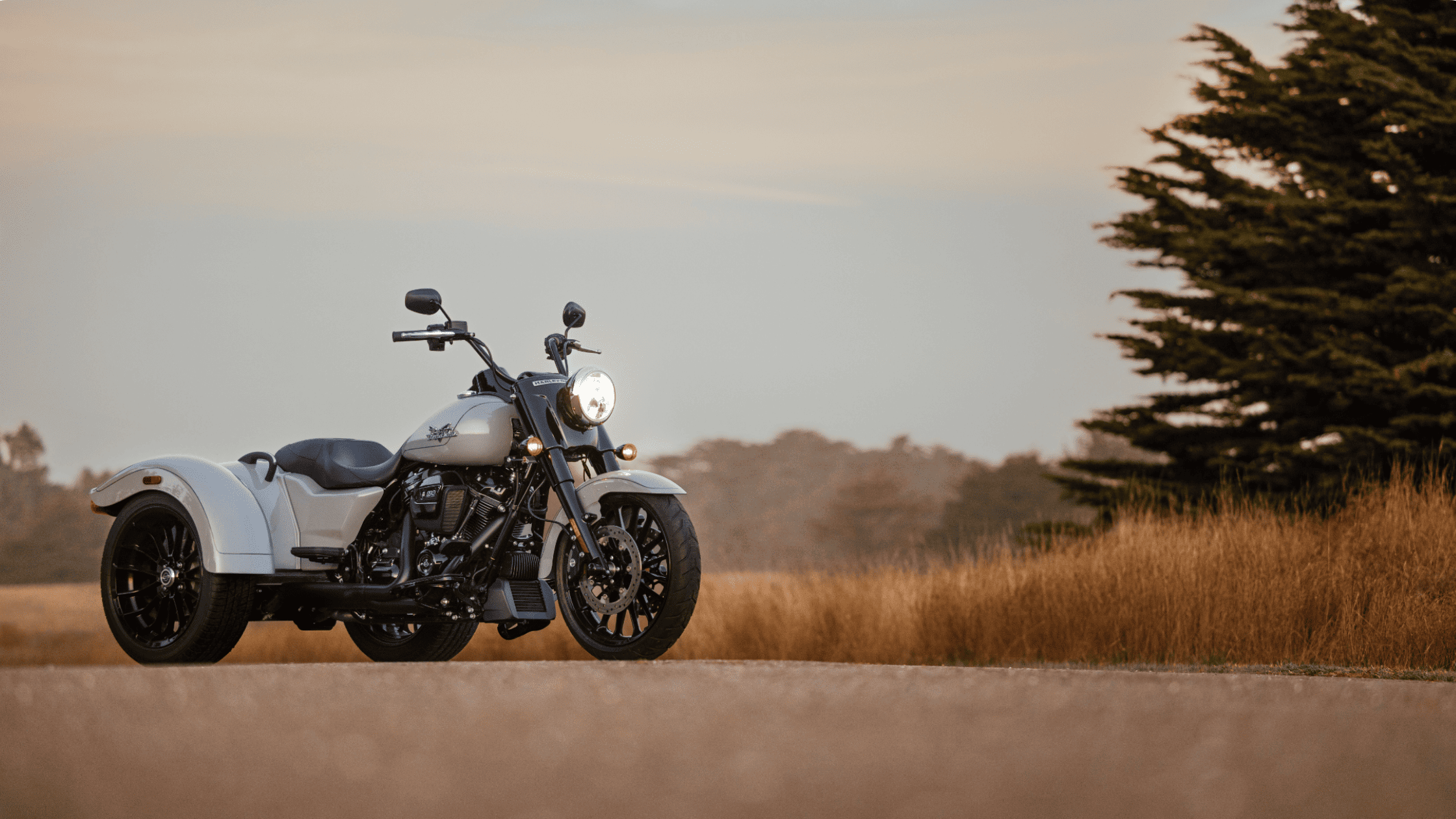
The 2025 Harley-Davidson® Freewheeler® combines the handling stability of a three-wheel design with the recognizable cruiser profile that defines Harley-Davidson® engineering. Built to perform with consistent control and balanced power delivery, the 2025 Harley-Davidson® Freewheeler® integrates a high-torque V-twin engine, advanced suspension systems, durable braking technology, and structured ergonomics for consistent performance across diverse conditions. It offers comfort and predictability without sacrificing the core performance attributes that define the brand.
Engine Power and Performance
The 2025 Harley-Davidson® Freewheeler® operates on the Milwaukee-Eight® 114 V-twin engine, engineered for responsive power and dependable torque output. The displacement provides strong low-end pull and smooth throttle transitions across extended riding ranges. Producing approximately 90 horsepower and 119 ft-lb of torque, the engine allows for efficient acceleration and steady cruising at highway speeds. Its air-cooled system maintains temperature control under load, promoting consistent operation across changing riding environments.
The engine design emphasizes a balanced mix of torque and efficiency, supported by electronic fuel injection that optimizes combustion and fuel economy. With an estimated 43 miles per gallon, the 2025 Harley-Davidson® Freewheeler® is structured for sustained travel with fewer refueling intervals. The three-wheel configuration ensures predictable traction as power transfers evenly through both rear wheels, minimizing slippage and improving stability during acceleration and cornering maneuvers.
The dual slash-down mufflers extend beyond function to provide refined exhaust output while maintaining compliance with the trike’s performance tuning. Exhaust back pressure is calibrated to preserve smooth torque delivery and the characteristic Harley-Davidson® rumble profile.
Suspension Structure and Ride Quality
The 2025 Harley-Davidson® Freewheeler® employs a dual-bending valve front suspension that delivers consistent damping for both comfort and control. The design allows fluid movement over uneven surfaces while preserving front-end stability. This system maintains balance through variable road feedback without compromising cornering precision. The rear suspension of the 2025 Harley-Davidson® Freewheeler® features an emulsion shock design with a quick-adjust preload knob, allowing the rider to adjust load settings efficiently. This adaptability ensures consistent chassis performance under different weight conditions, such as riding with a passenger or full luggage storage.
Together, the suspension components establish controlled handling, reducing vibration and improving tire contact. This configuration allows precise steering feedback while maintaining the predictable feel that is essential for three-wheel configurations. The combination of tuned damping rates and preload flexibility ensures the trike remains composed under acceleration, deceleration, and during tight turns.
Structural Design and Frame Configuration
The 2025 Harley-Davidson® Freewheeler® features a trike-specific frame designed for rigidity and even weight distribution. The chassis supports consistent handling across various speeds and load conditions. Harley-Davidson® engineers developed the structure to provide the responsiveness of a cruiser with the added assurance of a three-wheel platform. The geometry is balanced to reduce steering effort and optimize front-end stability, contributing to a steady ride across long distances.
The frame also supports a weatherproof rear trunk with a total storage capacity of 2 cubic feet. This compartment allows two helmets to fit side by side while leaving additional space for smaller items. The trunk opens from right to left for convenient access and features a locking mechanism to secure stored contents. The lid construction and sealing system prevent water intrusion during wet conditions.
Ergonomics and Rider Interface
The ergonomic configuration is developed around stability and reach optimization. The 2025 Harley-Davidson® Freewheeler® uses 12-inch mini-ape handlebars that position the rider in a commanding but natural posture. The angle and height allow riders of varying builds to achieve comfortable reach with minimal strain. The handlebar setup enhances leverage and control during turns or low-speed maneuvers while maintaining balanced body alignment for longer rides.
A contoured two-up seat provides support for both rider and passenger. Integrated passenger grab handles improve stability and grip during acceleration and deceleration. The seating material offers consistent comfort without excessive cushioning, maintaining connection to the trike’s road feedback. The placement of the foot controls complements the upright position, distributing weight evenly across the body to reduce fatigue.
Exterior and Finish Details
The 2025 Harley-Davidson® Freewheeler® carries a streamlined, blacked-out appearance that extends across the forks, dashboard, exhaust system, and powertrain. This uniform finish provides a cohesive visual identity that aligns with the brand’s modern trike lineup. The bodywork incorporates bobtail rear fenders, a design feature that nods to the brand’s traditional styling while maintaining aerodynamic consistency. The exposed frame elements and clean panel transitions contribute to easy maintenance and straightforward customization.
Riders can select from three available color options: Billiard Gray, Vivid Black, and Whiskey Fire. These finishes are factory-applied and integrated into the component design to ensure durability against environmental exposure. The front uses a bias black-wall tire, while the rear employs radial black-wall tires that enhance contact patch and tread longevity. Each tire type is engineered for the trike’s specific weight distribution and provides consistent grip during extended use.
Braking System and Control Integration
The braking system on the 2025 Harley-Davidson® Freewheeler® is engineered for dependable stopping performance. The trike uses dual floating rotors at the front and a fixed rotor at the rear, providing stable deceleration across varying speeds. The braking system is electronically assisted by the Harley-Davidson® Electronic Linked Braking (ELB), which automatically balances front and rear brake pressure for efficient stopping. This feature enhances performance during heavy braking situations by managing pressure distribution across both wheels.
The 2025 Harley-Davidson® Freewheeler® also includes an Anti-Lock Brake System (ABS) that prevents wheel lock under hard braking. The ABS sensors monitor wheel rotation, allowing braking control to remain steady and predictable in emergency scenarios. Combined with the ELB system, the brakes operate consistently even under shifting traction conditions, contributing to improved rider control.
Rider Safety Enhancements
The 2025 Harley-Davidson® Freewheeler® includes a complete suite of Rider Safety Enhancements designed to maintain traction and stability under acceleration, braking, and cornering. These systems operate electronically to monitor wheel slip, lean angle, and deceleration patterns, automatically adjusting power and brake inputs to sustain control.
The Traction Control System (TCS) manages rear-wheel spin to prevent loss of grip during acceleration. The Drag-Torque Slip Control System (DSCS) reduces rear-wheel slip during rapid deceleration or downshifts, particularly useful on slick surfaces. The trike’s Cornering Enhanced Anti-Lock Brake System (C-ABS) adjusts brake pressure in response to lateral movement, maintaining traction through corners. Similarly, the Cornering Enhanced Electronic Linked Braking (C-ELB) adjusts the ratio of braking between the front and rear during cornering to ensure predictable handling. The Cornering Enhanced Traction Control System (C-TCS) provides consistent acceleration management even during angled turns.
Together, these systems form a comprehensive stability management package that functions seamlessly within the trike’s core architecture. They contribute to safer operation across diverse environments, reducing rider workload without diminishing responsiveness.
Technological Integration and Functional Systems
The 2025 Harley-Davidson® Freewheeler® incorporates several innovations that simplify operation and improve efficiency. The Electric Reverse function allows riders to back into parking spaces or reposition easily without manual exertion. Activation is controlled through the handlebar interface, providing controlled backward motion for safe maneuvering. This function is especially beneficial when operating on inclines or within confined areas.
Electronic systems are designed for reliability, with minimal complexity for the rider. The control layout remains intuitive, allowing quick access to key functions without distraction. The display and switchgear follow the standardized configuration of Harley-Davidson® to maintain consistency across the touring and trike lines.
Comfort and Control Experience
Rider comfort in the 2025 Harley-Davidson® Freewheeler® is achieved through structural balance and vibration isolation. The trike’s three-wheel platform eliminates the need for constant balancing at stops, reducing rider fatigue during urban travel. Steering geometry allows light and responsive control at both low and moderate speeds. The wide front stance provides firm directional stability, while the rear wheels distribute weight evenly for improved traction.
The seat cushioning density and handlebar positioning reduce muscular strain during longer rides. Suspension travel is optimized for distance touring while maintaining responsiveness over rough surfaces. Combined, these attributes create a smooth, predictable experience without unnecessary mechanical harshness or excessive feedback.
Fuel Economy and Operational Efficiency
The 2025 Harley-Davidson® Freewheeler® is rated for an estimated 43 miles per gallon, placing it among the more efficient trike configurations in its class. The engine’s torque characteristics allow reduced throttle input at cruising speeds, which improves fuel conservation. The transmission and gearing ratios are calibrated to deliver linear power without over-revving. This efficiency contributes to extended range and reduced refueling frequency during longer rides.