
2025 Harley-Davidson® Fat Boy® near Evans, GA
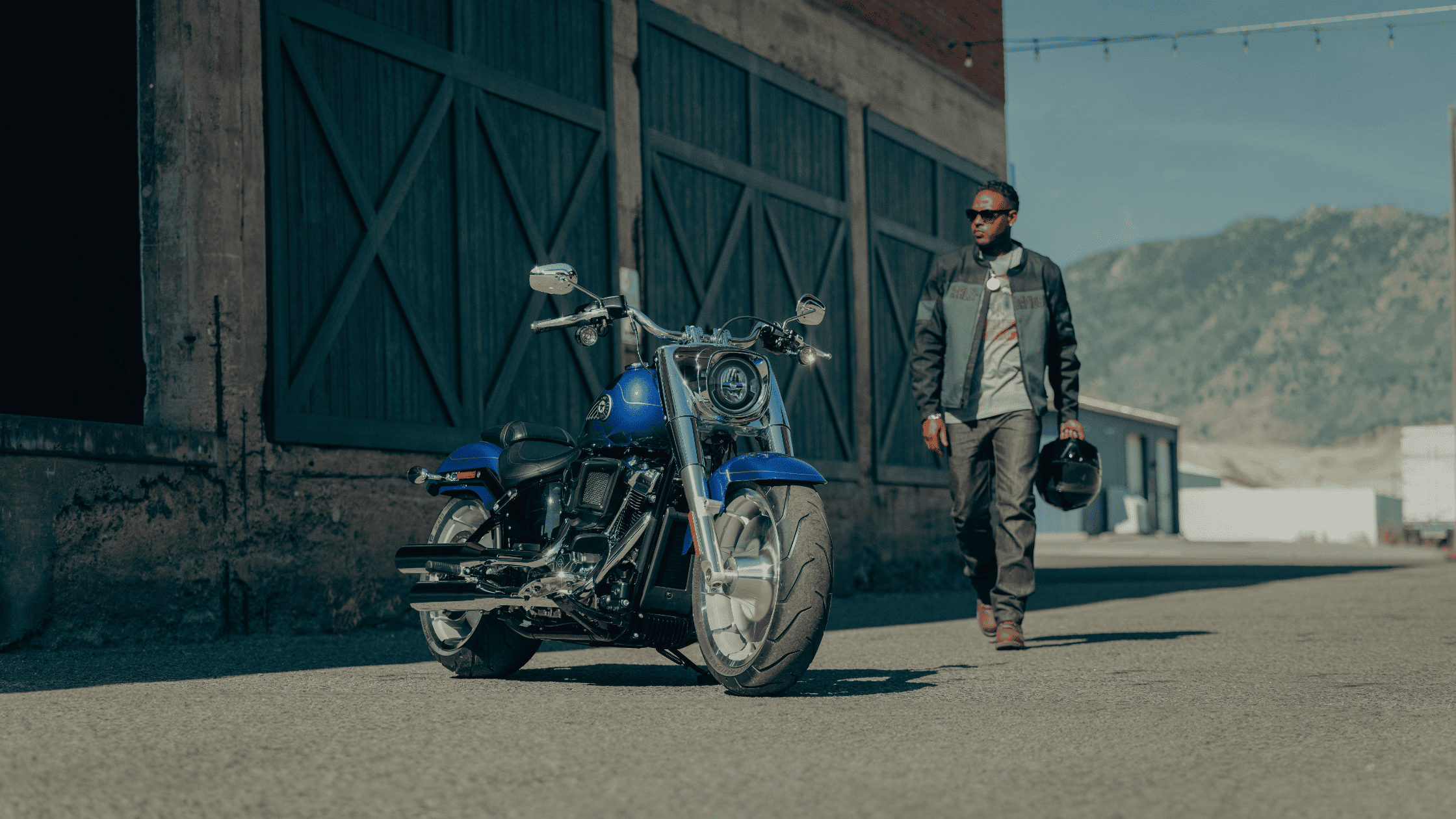
The 2025 Harley-Davidson® Fat Boy® continues as a heavyweight cruiser defined by mechanical clarity, dimensional stability, and deliberate engineering updates. This model retains its recognizable structural layout while incorporating refinements aimed at performance consistency, rider control, and integrated electronic support systems. The motorcycle is configured around a large displacement V-twin platform, a low seat height, and a wide wheel and tire combination that prioritizes straight-line stability and predictable handling. Every component serves a defined mechanical function, with design choices closely tied to structural strength, airflow efficiency, and operational durability. The 2025 Harley-Davidson® Fat Boy® emphasizes measurable output figures, updated suspension behavior, and expanded rider assistance technologies while maintaining the Fat Boy® platform’s established geometry.
Milwaukee-Eight® 117 Custom Engine Output and Mechanical Characteristics
The Milwaukee-Eight® 117 Custom V-twin engine installed in the 2025 Harley-Davidson® Fat Boy® is engineered to deliver high displacement torque with controlled throttle response across a broad operating range. The engine produces 104 horsepower and 126 foot-pounds of torque, supporting strong acceleration at low and mid-range engine speeds. This output configuration is optimized for sustained highway operation and urban riding without frequent gear changes. The V-twin layout supports efficient combustion timing and balanced power pulses that contribute to smooth operation under varying load conditions.
Fuel economy is rated at 47 miles per gallon, reflecting calibrated fuel delivery and combustion efficiency designed to balance performance demands with operating range. Engine cooling and internal component alignment are configured to maintain consistent operating temperatures during extended use. The Milwaukee-Eight® 117 Custom engine maintains mechanical simplicity while supporting modern electronic integration related to ride modes and traction management systems.
Exhaust Flow Design and Power Transfer Efficiency
The two-into-two exhaust system fitted to the 2025 Harley-Davidson® Fat Boy® is engineered to support optimized exhaust gas flow while maintaining symmetrical routing on both sides of the motorcycle. This configuration supports consistent backpressure management, which contributes to stable torque delivery across the engine’s operating range. The exhaust design aligns with the engine’s tuning profile, ensuring that throttle input translates into predictable acceleration without abrupt power spikes.
The exhaust system also plays a functional role in heat distribution and rumble regulation. Its updated internal flow characteristics support improved engine breathing, which enhances efficiency during steady cruising and transitional throttle input. The system is integrated into the chassis layout in a manner that preserves ground clearance and structural balance.
Suspension Architecture and Ride Stability Control
The 2025 Harley-Davidson® Fat Boy® incorporates an updated rear monoshock suspension system designed to improve ride comfort while maintaining firmness during higher load scenarios. The monoshock configuration supports centralized mass distribution and consistent rear wheel contact with the road surface. Suspension tuning prioritizes composure during acceleration and braking while absorbing surface irregularities encountered during extended rides.
Front suspension geometry complements the rear setup by supporting straight-line stability and controlled steering input. The overall suspension system is calibrated to manage the bike’s substantial weight and wide tire profile without compromising rider feedback. This balance allows the motorcycle to maintain predictable handling characteristics during both low-speed maneuvering and sustained cruising.
Wheel Construction and Tire Interface Dynamics
The 18-inch machined Lakester wheels define the stance and functional footprint of the 2025 Harley-Davidson® Fat Boy®. These wheels are engineered for structural strength and load-bearing capability, supporting the motorcycle’s overall mass and torque output. The wheel design allows for precise alignment and contributes to stable tracking at higher speeds.
The wide tire configuration enhances traction during acceleration and braking while also contributing to the motorcycle’s planted feel. Cutback fenders are shaped to accommodate the tire profile while maintaining consistent airflow and minimizing debris accumulation. The combined wheel and tire setup supports consistent road contact, which is essential for the effective operation of traction control and braking systems.
Structural Design and Surface Finishing Methods
The 2025 Harley-Davidson® Fat Boy® features a rounded fuel tank finished with premium factory paint formulations designed for durability and surface consistency. Updated tank medallions are applied with precision mounting methods to ensure long-term adhesion and resistance to vibration. The paint application process emphasizes uniform thickness and resistance to environmental exposure.
A polished chrome headlamp nacelle defines the front assembly and supports both aesthetic and protective functions. The nacelle houses the lighting system while shielding internal components from road debris and moisture. Chrome finishing is applied using controlled processes that prioritize corrosion resistance and surface integrity over extended service life.
Instrumentation Layout and Display Integration
The 2025 Harley-Davidson® Fat Boy® uses a 5-inch analog gauge paired with an integrated digital display. This configuration supports immediate readability while providing access to essential operating data. The analog gauge delivers speed information with clear visual contrast, while the digital display presents ride mode status and system alerts.
The display system is designed to remain visible under varying lighting conditions and does not require extensive rider interaction during operation. Information presentation is limited to essential data points, reducing cognitive load and allowing the rider to focus on vehicle control and situational awareness.
Control Interface Engineering and Ride Mode Access
Updated hand controls on the 2025 Harley-Davidson® Fat Boy® support integrated access to cruise control, ride modes, and traction management systems. Control placement is designed to minimize hand repositioning and reduce rider fatigue during extended operation. Switchgear feedback is calibrated for positive engagement, ensuring accurate input recognition.
Ride modes adjust throttle response and electronic intervention thresholds to match riding conditions. These adjustments occur through electronic control systems that operate in coordination with engine management and safety technologies. The integration allows the motorcycle’s behavior to remain consistent and predictable across changing road environments.
Electrical Support Systems and Device Connectivity
USB-C charging capability is integrated into the motorcycle’s electrical system to support modern device requirements. This feature allows riders to maintain power for navigation systems, communication devices, and other electronics during extended rides. The charging port is positioned to reduce exposure to environmental elements while remaining accessible.
Electrical system capacity is designed to support charging demands without compromising vehicle performance or system stability. Integration of this feature reflects a functional approach to rider convenience without altering the motorcycle’s mechanical layout.
Brake System Configuration and Ergonomic Adjustment
The braking system on the 2025 Harley-Davidson® Fat Boy® includes an adjustable brake lever that allows riders to set lever distance based on hand size and riding preference. This adjustment supports consistent braking force application and improved control during emergency or low-traction scenarios.
Brake components are sized to manage the motorcycle’s weight and torque output while maintaining predictable stopping performance. Lever adjustability ensures that braking efficiency remains accessible to a wide range of riders without requiring aftermarket modifications.
Integrated Rider Safety Enhancement Technologies
The 2025 Harley-Davidson® Fat Boy® is equipped with a comprehensive suite of Rider Safety Enhancements designed to assist during acceleration, braking, and deceleration events. These systems operate through electronic sensors and control modules that monitor wheel speed, throttle input, and vehicle dynamics.
Anti-lock Brake System functionality helps prevent wheel lock during straight-line braking, supporting directional control under heavy braking input. Traction Control System logic manages rear wheel slip during acceleration, particularly on low-grip surfaces, enhancing stability without abrupt power reduction.
Advanced Cornering Assistance and Stability Management
Cornering Enhanced Anti-lock Brake System functionality accounts for lean angle when modulating brake pressure, supporting controlled deceleration while the motorcycle is leaned. This system adjusts braking force to maintain tire contact and reduce the risk of loss of control during cornering.
Cornering Enhanced Traction Control System logic manages rear wheel behavior during both straight-line and cornering acceleration. The system adapts intervention thresholds based on lean angle data, allowing smoother power application while maintaining traction. Cornering Drag-Torque Slip Control System functionality manages rear wheel deceleration during aggressive downshifts or rapid throttle reduction, particularly on wet or uneven surfaces.
Tire Pressure Monitoring and Operational Consistency
The Tire Pressure Monitoring System continuously monitors air pressure levels in both tires and provides alerts through the information display if values fall outside recommended ranges. Proper tire pressure is essential for braking performance, handling stability, and tire service life.
This system allows riders to address pressure variations before they affect vehicle dynamics. Integration into the display system ensures that alerts are visible without requiring additional equipment or manual checks during operation.
Rider Geometry and Seat Height Configuration
The laden seat height of 25.9 inches supports a low center of gravity and stable footing at stops. This configuration contributes to rider confidence during low-speed maneuvering and stationary operation. The seating position aligns with the wide stance and long wheelbase of the 2025 Harley-Davidson® Fat Boy®, supporting balanced weight distribution.
Rider ergonomics are configured to reduce fatigue during extended rides while maintaining direct control over steering and braking inputs. The geometry supports a consistent riding posture aligned with the motorcycle’s cruiser orientation.